Turning lecture videos into notes you'll actually revisit: lecture-to-notes is now open source
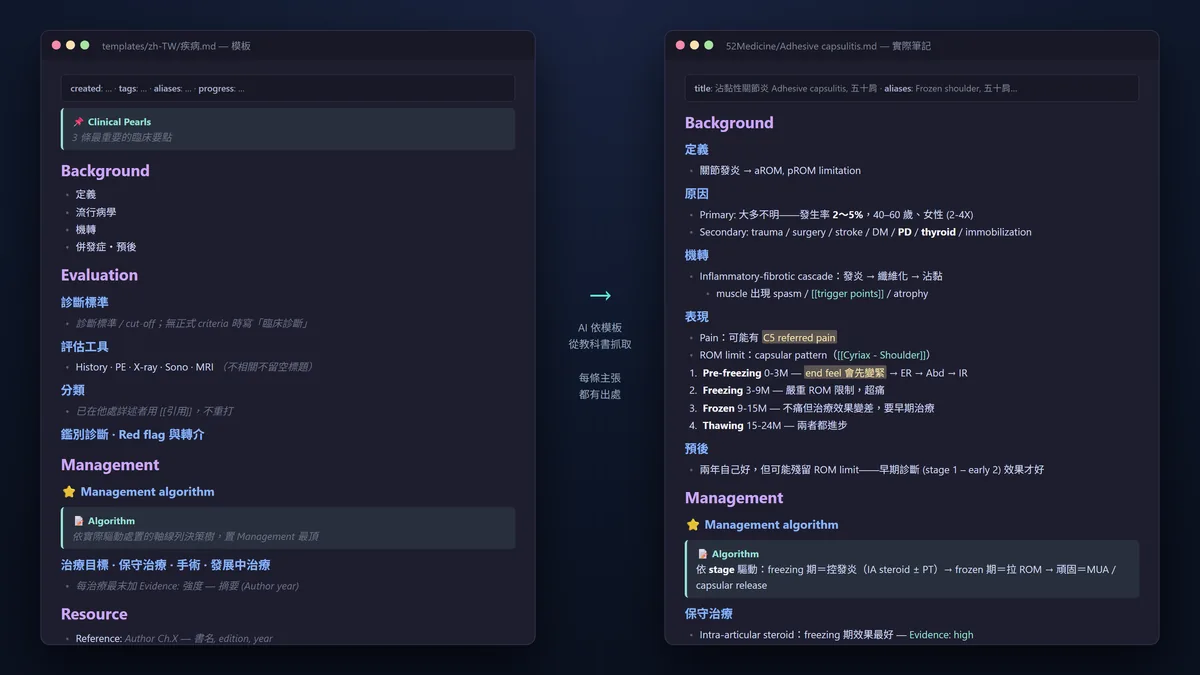
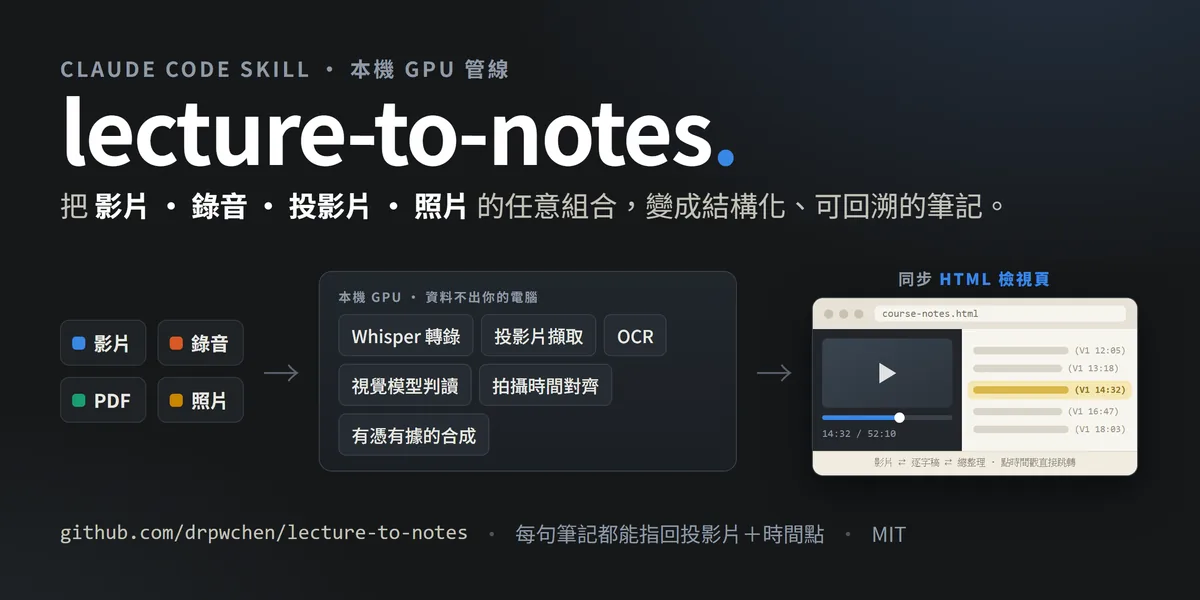
A while back on Facebook, I shared the results of using AI to organize lecture videos. I got an unexpectedly huge response, and people kept asking when I’d release the tool. I’ve spent some time cleaning it up, and today it’s officially open source: lecture-to-notes. Key takeaways from this post Why everyone records lectures, but nobody goes back to finish watching them Notes don’t have to be shaped like “text + pictures”: video, transcript, and summary synced on one page Bring whatever you have: video, audio, slides, photos, all connected to the same timeline A few technical insistences: the transcript never automatically changes words, timing uses evidence instead of guessing Why OCR alone isn’t enough: how to tell if textless flowcharts and ultrasounds are important Fallback options for running without an NVIDIA GPU The forest of tripods at the back of the classroom I’ve always found physical medicine and rehabilitation (PM&R) lectures hard to take notes on. For classes like manual therapy and musculoskeletal ultrasound, the knowledge is hidden in the “movements.” You can’t capture it no matter how much text you write down. So the venue is always packed with tripods. Everyone’s recording, planning to review it later over a meal. ...