Clinically I focus on manual therapy, sports medicine and ultrasound-guided intervention. These are my own rehabilitation medicine study notes, and how I use evidence-based methods to read papers, do research and teach. Credibility grows from here.
Clinical & Evidence

Rotator cuff tears and calcific tendinitis: if you cannot lift your arm, do you really need surgery?
Rotator cuff tears are common, and many people over 70 have a torn rotator cuff with no pain at all, so a tear on imaging does not automatically mean surgery. This post covers how to tell whether the tear is really what hurts, when to get an early orthopedic evaluation, and when calcific tendinitis of the shoulder calls for an injection, lavage, or shockwave therapy.
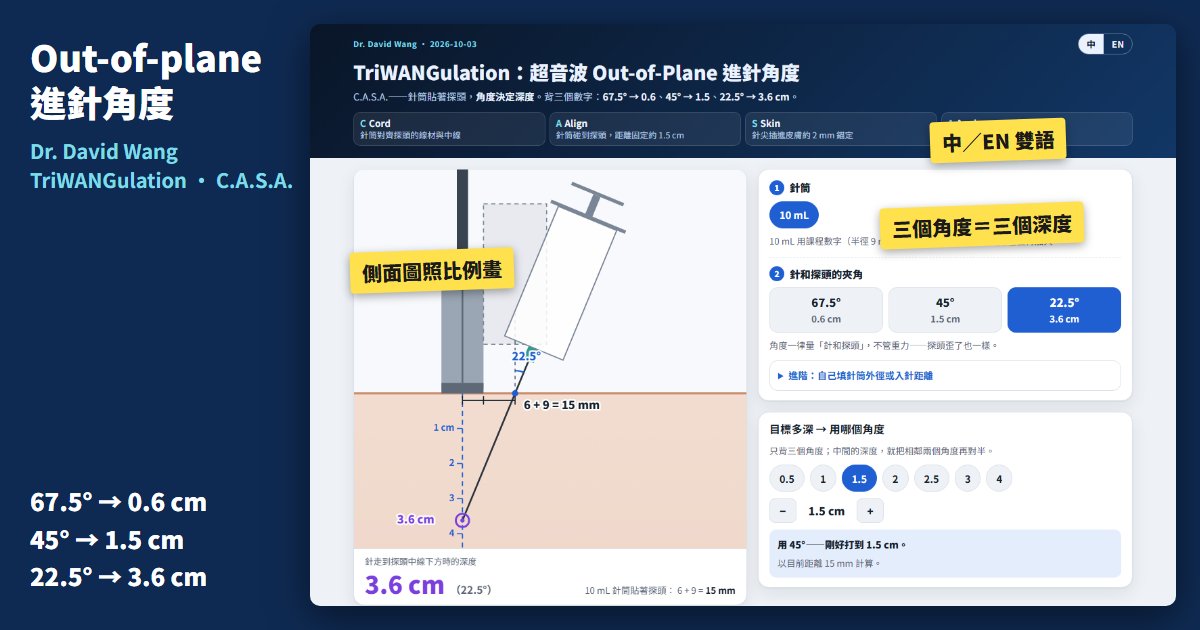
Out-of-Plane Needle Depth: Dr. David Wang's Three Angles, Now a Web Page
Keep the syringe against the probe and the angle alone sets your out-of-plane depth: 67.5° reaches 0.6 cm, 45° reaches 1.5 cm, 22.5° reaches 3.6 cm. Dr. David Wang taught this at this year's prolotherapy volunteer clinic, and I turned it into a web page you can check on your phone.
How much exercise do kids need? At what age can they lift weights?
How long should kids exercise a day, when can they touch a barbell, and will training too much cause injuries? This post distills exercise recommendations for children and teens, safety conditions for weight training, and red lines for training volume like "weekly hours shouldn't exceed their age" into a practical version for parents and coaches. It also explains why kids are especially prone to injuries during growth spurts.
De Quervain's: Holding Your Baby and Scrolling Your Phone Hurt the Same Tendon
De Quervain's (stenosing tenosynovitis) happens when the tunnel for the two tendons at the base of your thumb narrows. Holding a baby and scrolling your phone for hours can both trigger it. This post explains how to tell if you have it, why "it'll go away when you stop breastfeeding" isn't entirely true, and why the first-line treatment is a steroid injection plus a thumb splint, rather than just wearing a brace and resting.
Plantar Fasciitis: The First Step in the Morning Hurts Most, But Insoles Shouldn't Be Used Alone
The most classic presentation of plantar fasciitis (heel pain) is the severe pain with the first step out of bed in the morning. This post explains why bone spurs have little to do with pain, why the 2023 guidelines changed "using insoles alone" to not recommended, who should use a night splint, and where shockwave and injections fit in.
Osteoporosis: No Symptoms, but Stopping the Wrong Meds Causes Fractures
Osteoporosis has almost no symptoms before a fracture, so "I feel fine" doesn't mean your bones are fine. Here's a summary of the latest 2025 Taiwan guidelines: three warning signs you can measure at home, who should get a bone density scan, why you need both calcium and vitamin D, and the most overlooked issue—stopping osteoporosis injections without a relay plan causes rebound fractures.
Your knee is "degenerating", now what? What actually works in osteoarthritis
Knee osteoarthritis is not a one-way road where the cartilage wears out and all you can do is wait for a replacement. This post explains that only three treatments are endorsed at the highest level by every major guideline — exercise, weight loss and understanding your own disease — and reviews what the societies now actually say about glucosamine, hyaluronic acid, PRP and insoles, plus why the grade of degeneration on an x-ray should not decide whether you have surgery.
Trigger finger: when your finger gets stuck and needs prying open, should you get an injection or surgery?
Waking up with a locked finger stuck in a bent position that you have to pry open with your other hand—that's trigger finger, or stenosing tenosynovitis. The problem isn't the knuckle where you feel the pain, but the A1 pulley at the base of your palm. This post explains what the four grades mean, when an injection is enough, and why injections are more likely to fail for people with poorly controlled diabetes.
Frailty isn't just ageing: start with "lately I get tired so easily"
If an older relative is walking slower and keeps saying they are tired, a lot of people write it off as just getting older. But physical frailty is a measurable state with clear criteria, and in its early stages it can be stopped. This post covers the five criteria for frailty, why feeling tired is the earliest and most important signal, and why exercise and deprescribing work far better than supplements.
Collapsing After the Finish Line: Most Post-Exercise Fainting is Harmless
The most crucial question when someone faints after exercise (finish-line collapse) isn't whether they're dehydrated, but when they collapsed. Collapsing during the race should be treated as cardiac arrest; collapsing after crossing the finish line is overwhelmingly benign postural hypotension, which resolves after lying down with legs elevated for 20 to 30 minutes. This post explains why the two are so different, which three conditions must be ruled out on-site, and why routine IV fluids are actually unnecessary.
Heat stroke isn't just being overheated: cool first, transport second
When a kid collapses on the field in summer, most people's instinct is to rush them to the hospital. But the key to surviving exertional heat stroke is bringing their temperature down right there on the sidelines—every minute delayed adds to organ damage. This post explains how to tell heat stroke from just being uncomfortably hot, why tympanic and forehead thermometers are completely useless, and why Taiwan's heat warning lights can't be used to manage training volume.
That Painful Bump Below the Knee: Osgood-Schlatter Is Not Growing Pains
When a teen's knee has a painful bump below it, it's often endured as growing pains. This post explains how Osgood-Schlatter is diagnosed, whether they need to stop sports, the quantitative red lines for training volume, and how a Danish national tracking found 70% still have residual discomfort in adulthood—it doesn't "heal on its own" as much as people assume.
Sarcopenia: AWGS 2025 Made the Diagnosis Simpler
AWGS 2025 simplified the diagnosis of sarcopenia to just low muscle mass and low muscle strength. Physical performance is now an outcome measure for tracking, and the "severe sarcopenia" grading was cancelled. This post summarizes the differences between the old and new cutoffs, why you should start testing at age fifty, and why exercise plus protein is currently the only effective prescription.
Milwaukee Shoulder: The Shoulder With Recurrent Massive Effusions
Milwaukee shoulder syndrome — when older folks repeatedly have 30 to 40 milliliters of fluid aspirated from their shoulder, it's mostly not just simple osteoarthritis. It's often a destructive arthropathy caused by rotator cuff tears and crystal deposition. This post covers the keys to diagnosis, how to send the synovial fluid for testing, and whether seniors with poor kidney function can get steroid injections.
Do you still need to exercise at 80? An older adult stumped me, so I actually checked the textbooks
After being stumped when talking about exercise with an 80-year-old adult, I broke the answer into five layers and checked textbooks and papers: walking isn't enough, multicomponent exercise is needed; telling people to exercise doesn't work because it uses the wrong stage of behavior change; motivational interviewing is the right tool; older adults have the right not to exercise; and gerotranscendence reminds us that living comfortably is sometimes more important than living long.
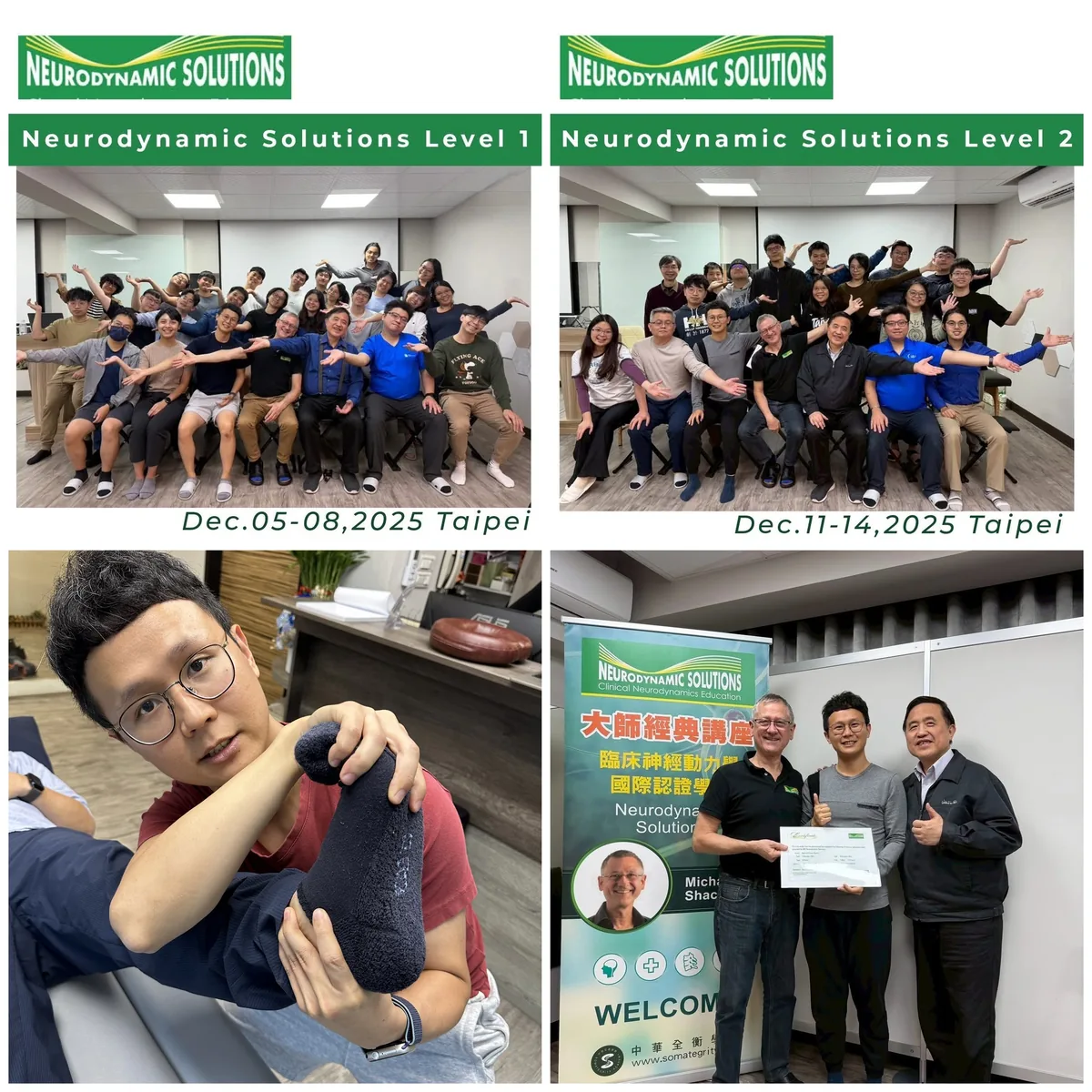
"Neurodynamic Solutions: Turns out my nerve exams have never been standard enough"
"After taking Michael Shacklock's two-level Neurodynamic Solutions course in Taiwan, I've put on a new pair of glasses for looking at nerve pain: standardizing nerve exams, reasoning from mechanics and anatomy, and putting evidence-based home exercises back into the hands of patients."
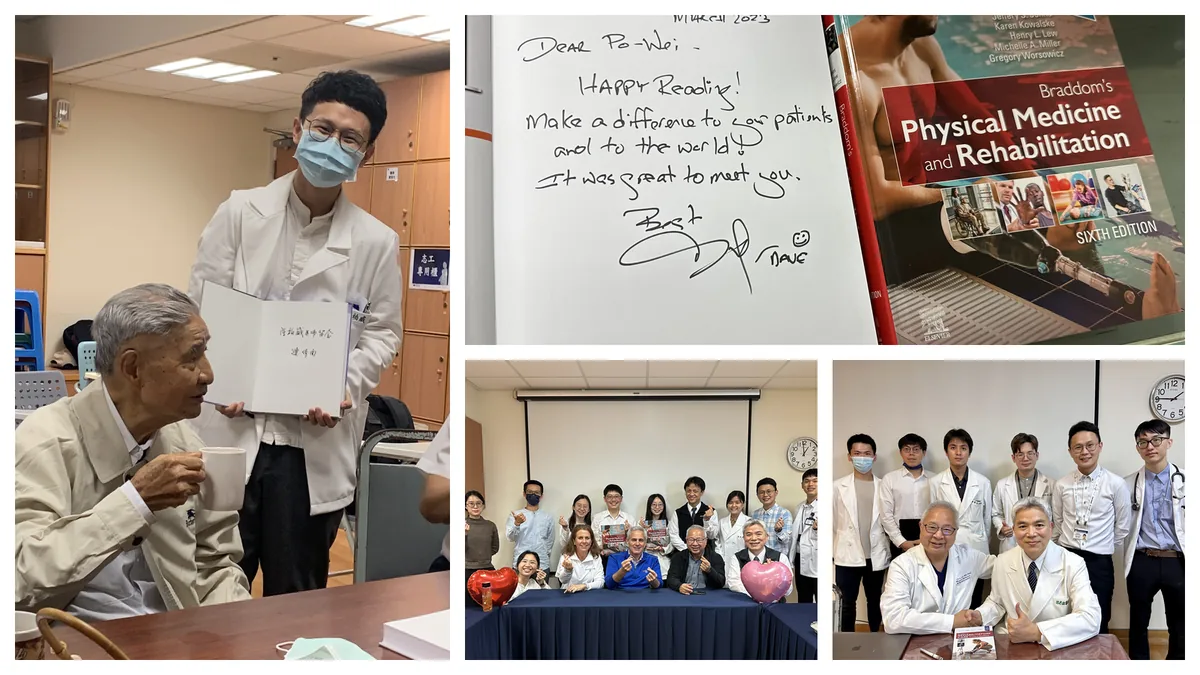
Completing PM&R Residency
I finished the board examination last weekend and officially became a PM&R attending physician. Looking back at my four years of training at Hualien Tzu Chi Hospital, from Prof. Cifu's reminder to "not be limited", to getting exposure to pediatric rehab, neuro, orthopedics, musculoskeletal ultrasound, and manual therapy, and then jumping into vibe coding with Claude Code this February to redesign my study methods. Documenting this milestone, and previewing the AI learning tools I want to share next.
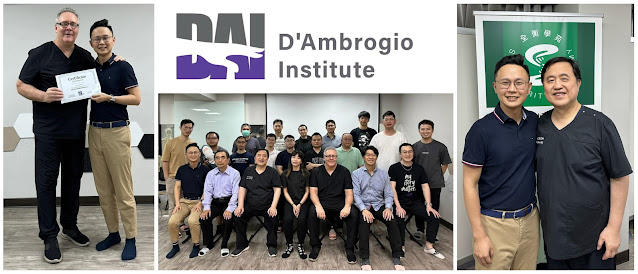
A Physiatrist's Learning of the DAI Osteopathy Course
DAI Osteopathy is a manual therapy system developed by Dr. Kerry D'Ambrogio, integrating osteopathy, physical therapy, and acupuncture. Centered on systemic evaluation, gentle techniques, and "repeated reassessment," it's completely different from typical courses that only teach maneuvers. After six days of class, I actually helped a friend resolve their long-standing finger stiffness. The takeaways far exceeded my expectations.
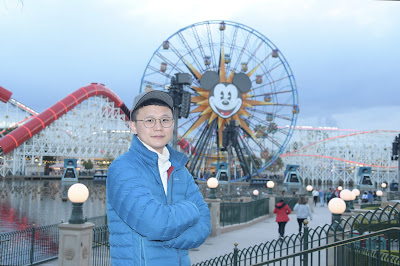
First Time in the US, First International PM&R Conference at AAP Physiatry '23
My first time in the US and my first AAP Physiatry '23. The biggest shock wasn't the academic content, but the energetic, complimentary culture of American physicians, alongside the diverse developments in PM&R like pelvic rehabilitation, AI gait analysis, and lifestyle medicine. The bar for a resident to submit a poster is much lower than you'd think. I highly recommend taking the plunge and attending.
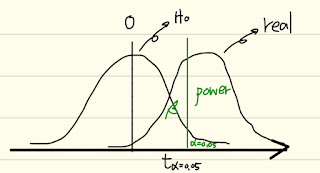
[EBM] Should I calculate study power when results are not significant? Misleading post-hoc power
Calculating post-hoc power when statistics are non-significant is actually a misleading practice: it's inherently tied to the p-value. When p > 0.05, post-hoc power will inevitably be low—the two are basically circular reasoning. A more practical alternative is to interpret the 95% confidence interval alongside MCID, which aligns with the latest 2022 Cochrane GRADE guidelines.
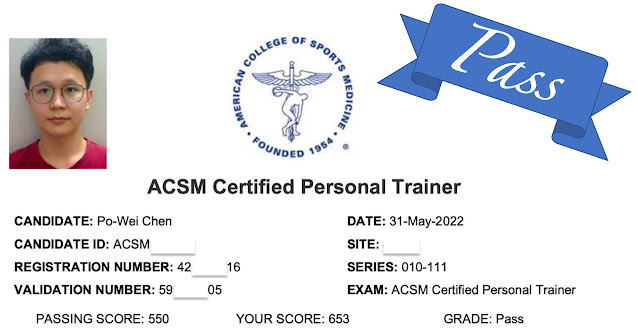
ACSM-CPT Prep (Part 1): Introduction
I passed the ACSM-CPT, a personal trainer certification with only a 53% pass rate in the US. As a PM&R resident, I took this exam to build a solid foundation in sports medicine and to force myself to study. There's not much shared online about this exam, so I hope this series can serve as a reference for anyone interested.
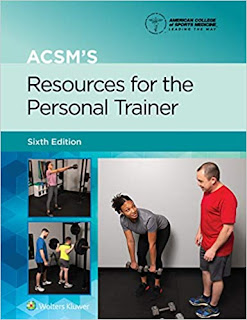
ACSM-CPT Prep (2): Resources
The core resources for preparing for the ACSM-CPT are the three-day course by Dr. Chia-Chih Lin, along with the CPT textbook and GETP 11th edition. For practice questions, the case studies in the official Certification Review are enough; Pocket Prep and commercially available practice exams each have their trade-offs. This post summarizes the pros, cons, and my recommendations for each resource.

ACSM-CPT Prep (Part 3): Question Trends
The 135 questions on the ACSM-CPT involve almost no rote memorization. They are nearly all flexible "best answer" questions. The exam covers four domains, ranging from the details of exercise prescription to US laws like negligence and HIPAA. Being off by a single number means picking the wrong answer. In this post, I break down the question trends and things to watch out for, domain by domain, based on what I encountered.
ACSM-CPT Prep (Part 4): The Prep Process and Test Day
It took me just 25 days from the course to the exam, with about 10 days of actual studying. This post shares a 9-step recommended prep sequence, plus the test day check-in process, whiteboard tricks, and time management, so you know exactly what to expect before you walk into the ACSM-CPT exam.

Technology Helping People with Disabilities Bridge the Gap to the World
A patient with a high-level spinal cord injury used an eye-tracking computer to open the door to connecting with the world, all while staying humorous and cheerful. In Taiwan, we have the Icebreaker Association and MUVE using technology to help people with disabilities bridge the gap to the world, showing that disability doesn't mean losing out on life.
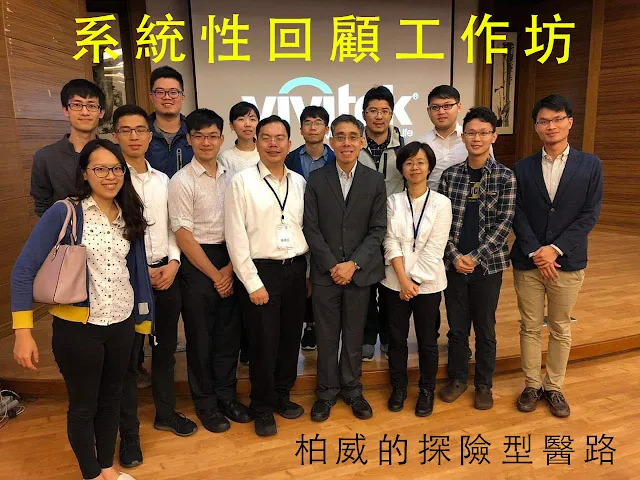
<Systematic Review Workshop> Takeaway 1: Do we use PICO for diagnostic, prognostic, and harmfulness studies?
PICO is actually only suitable for therapeutic studies. For diagnostic studies, change it to PIGO (adding Gold standard); for harmfulness studies, use PEO (random assignment is impossible due to ethical concerns); for prognostic studies, just PO is needed. This was the most rewarding lesson from Prof. Edwin Chan of Cochrane Singapore's workshop. You need to figure out the study type before setting your keywords so your search can be precise.
Systematic Review Workshop Takeaway 2: Are Few Search Results a Sign of a Good Search Strategy?
Getting only 5 papers in your search results doesn't mean your search was highly accurate—you might have missed a lot of important articles instead. When you get too many results, use title search, filter, and NOT to narrow things down; when there are too few, use MeSH terms, similar articles, or free text to broaden your criteria. Mastering the trade-off between sensitivity and specificity is the only way to find the literature you actually need.