Let’s start with the most counterintuitive thing: when a kid collapses during hot weather exercise and their mental status is off, the right order is to cool them down on site first, then send them to the hospital.
Not call an ambulance and figure it out on the way. The international consensus is blunt—cool first, transport second. Because what determines whether they suffer permanent damage isn’t how fast they get to the ER, but how long their body temperature stays above 40°C.
I’m writing this for parents and coaches taking kids out to play and train this summer.
First, tell them apart: uncomfortably hot vs. actual heat stroke
There are several ways to feel sick during summer exercise, and the differences are massive, but only one requires immediate life-saving action.
The most important dividing line to remember is mental status:
- Cramps—muscles twitch and cramp painfully, but the person is completely awake and answers questions clearly. Not dangerous.
- Heat syncope—things go black while standing, but they wake up quickly if you lie them down and elevate their legs. Also not particularly dangerous.
- Heat exhaustion—pale face, cold sweats, headache, nausea, too weak to stand up, but they can still answer you when asked. Needs management; they’ll usually recover after 30 minutes of rest and hydration.
- Heat stroke—the person isn’t right anymore. Answering with nonsense, talking illogically, cursing randomly, convulsing, or unarousable. This can kill, and every second counts.
So on the sidelines, just ask yourself one question: Is this kid’s brain still working normally?
If not, treat it as heat stroke. Don’t hesitate.
Why tympanic and forehead thermometers are completely useless
Many people don’t know this: on the sidelines, tympanic, forehead, oral, and axillary temperatures are all inaccurate, and they show “falsely low” readings—meaning the person is in grave danger, but the device gives you a normal number.
One study had athletes run 14 miles in a tropical climate. Their average post-race rectal temperature was 39.7°C, but the same group’s oral temperature was only 37°C, completely normal.
If you got a 37 on a forehead thermometer that day, you’d relax and just let them keep resting—while they are actually having a heat stroke.
The only truly reliable measure in the field is rectal temperature. Obviously, not everyone can do this on the sidelines, so the fallback practical rule is:
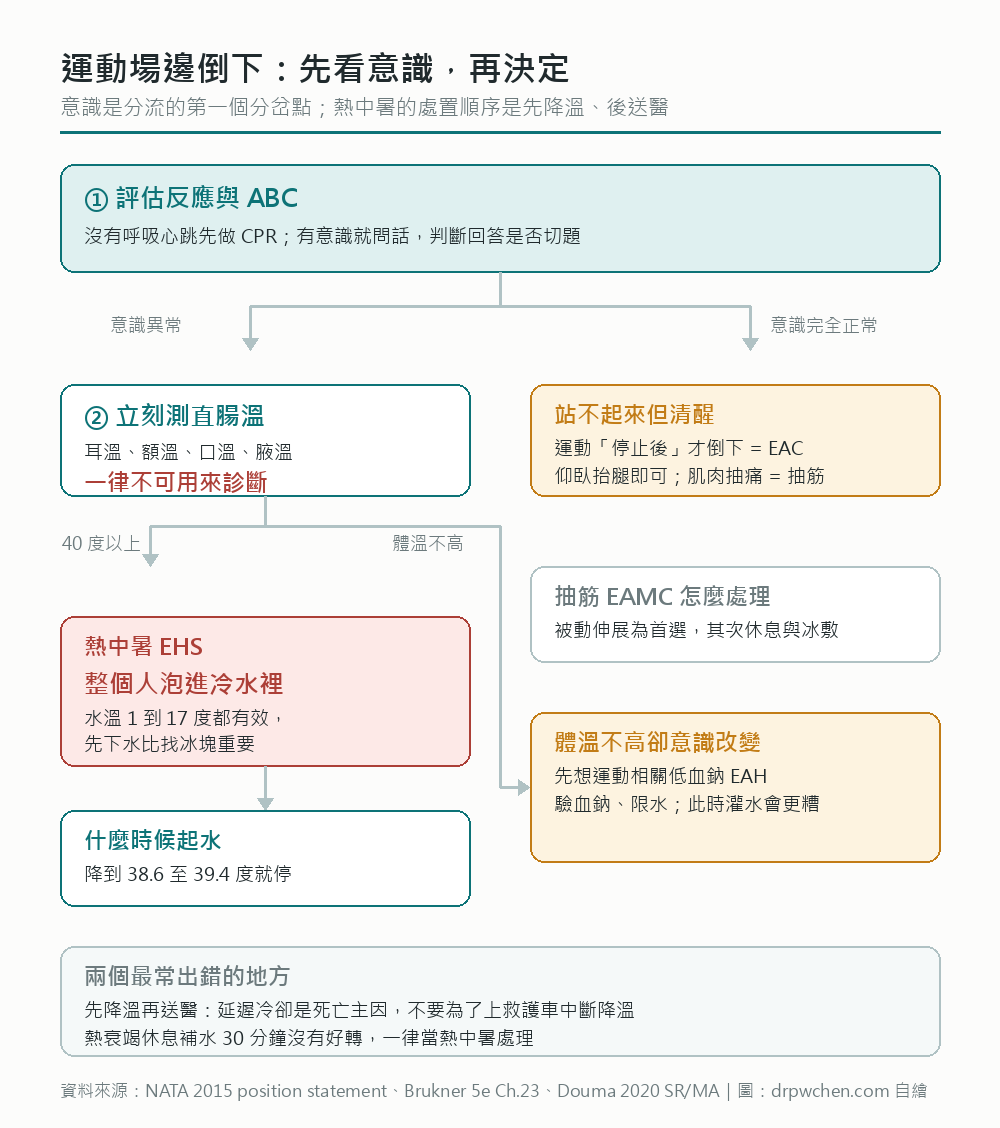
If you can’t measure temperature, judge by mental status. If their mental status is off and they just finished exercising, treat it directly as heat stroke. Don’t wait for a temperature number.
What to do on site: dunk them
You find a kid with an abnormal mental status who just exercised under the scorching sun:
- Call an ambulance (tell someone else to do it, don’t leave the kid)
- Strip off gear and clothes—pads, helmets, jerseys; take off as much as you can
- Immerse their whole body in cold water—this is the single most effective method, bar none
- Take them out when they wake up and their temperature drops; don’t leave them soaking indefinitely
People get stuck on step 3 most often because they think “where am I going to find ice water?” So you need to know two things:
- Water temperature doesn’t matter as much as you think. A systematic review of international first aid compared ice water, very cold water, and regular cold water, and found no significant difference in cooling rates. So don’t waste time looking for ice. Dunking them first is what matters.
- If there’s no tub, hose them down continuously with a thick hose, or wrap them in wet sheets with ice. Just putting ice packs on their neck and armpits, or only soaking their hands and feet, isn’t enough to cool them down and can’t be your main method.
By the way: antipyretics are useless. Heat stroke isn’t a fever; the thermoregulatory system is completely broken. Tylenol and NSAIDs not only don’t work, they just add extra burden to the liver and kidneys.
What if it’s just heat exhaustion?
If they’re fully conscious and just weak and nauseous: move them to the shade, lie them flat with legs elevated, and have them drink water slowly. A slightly salty sports drink is better than pure water.
Then look at the clock:
If there’s no clear improvement within 30 minutes, upgrade to heat stroke protocol and transport.
Hydration: don’t wait for kids to say they’re thirsty
One thing is very clear in the research—even if you put water right next to kids and let them drink freely, they still won’t drink enough. They lose an average of 0.5% to 1% of their body weight after exercise. And flavoring the drinks to their liking doesn’t work either; several studies have tried this with no consistent improvement.
So for this age group, hydration needs a scheduled job, don’t rely on them wanting to drink. Tell them to drink when it’s time, rather than waiting for them to say they’re thirsty.
A quantitative method you can do at home:
- Weigh them once before and once after exercise.
- Dropping more than 2% of body weight means they drank too little (for a 30kg kid, a 0.6kg drop crosses the line).
- You can also check the color of their first morning urine; dark color means not enough water.
Heat acclimatization: you can train it, but you can lose it too
The body does adapt to heat—you sweat earlier and more, heart rate slows down, and the same weather feels less miserable. This acclimatization takes about one to two weeks of gradual exposure, with most of it completing in the first four to seven days.
But two things are often overlooked:
- Coming straight from an AC room, or flying in from abroad, equals zero days of acclimatization. Going out the next day to compete in a high-intensity event carries the highest risk.
- Stop training for three weeks, and the acclimatization is completely gone. So when coming back from a long vacation, or returning to play after resting an injury, you have to ramp up gradually again, not just pick up at the original intensity.
There’s also a statistical fact: the first two or three weeks of the preseason is when heat illnesses are most concentrated all year.
Taiwan’s heat warning lights can’t manage training volume
The high-temperature warnings on our phones are handy, but you have to realize they are answering a different question.
Taiwan’s “Lohas Weather” heat illness warning lights use the daily maximum wet bulb globe temperature (WBGT), showing a yellow light at 32°C, orange at 34°C, red at 36°C, and purple at 38°C—and its intended audience is the general public doing daily activities.
But the risk threshold for high-intensity exercise recognized by sports medicine is WBGT 28°C.
There’s a 4-degree gap between those two numbers. In other words, in that zone before the lights even turn on, kids doing high-intensity training have already entered the risk zone.
(I should remind you that this is my deduction from putting the two sets of numbers side by side, not an official statement. Currently, there is no official WBGT activity modification chart in Taiwan specifically for the athletic population.)
By the way, those American charts saying “if it’s above X degrees, practice can’t exceed Y hours”—the original text explicitly states they are just examples from a specific state and are not universally applicable, because you have to consider local climate, intensity, acclimatization status, gear, and age. Taiwan has high humidity, so copying them directly isn’t safe.
So are kids naturally less heat-tolerant than adults?
Traditional textbooks say yes—larger body surface area ratio, less sweating, more heat production.
But the American Academy of Pediatrics’ policy statement corrected this view: as long as they are adequately hydrated, adolescents’ thermoregulation and tolerance when exercising in hot environments are not inferior to adults. What really causes heat illness is inadequate hydration, pushing the intensity too hard, insufficient rest between matches on the same day, and wearing unbreathable gear—all of which are modifiable.
The implication of this shift is: when a kid gets a heat stroke, it’s mostly not a biological weakness, it’s a scheduling problem.
And “multiple matches on the same day with insufficient recovery between them” is specifically called out by the AAP—summer age-group tournaments often have prelims and finals on the same day, which deserves special attention.
When you absolutely must go to the hospital
- Any abnormal mental status (answering with nonsense, unarousable, convulsing)—immediately, and cool first before you leave.
- Heat exhaustion that shows no improvement after 30 minutes of rest and hydration.
- Post-exercise urine that looks like cola or black tea, severe muscle soreness and weakness (could be rhabdomyolysis).
- Temperature isn’t high, but they have a headache, nausea, and swollen fingers and face (could be exercise-associated hyponatremia from overdrinking; in this case, giving water is actually dangerous).
That last one is the easiest to misjudge—you see a kid feeling sick and just keep pouring water down their throat. If they actually have hyponatremia, more water makes it worse. So if their temperature is normal but their mental status is off, you have to think of this one.
Clinical Pearls
- Heat illness is a continuum: cramps → syncope → exhaustion → stroke (T >40.5°C + CNS abnormalities)
- Rectal temperature is the only reliable core temperature measurement on the sidelines; oral / tympanic are inaccurate
- Golden rule for heat stroke management: cool first, transport second; initiating cold water immersion (CWI) within 30 minutes is the gold standard
- Cooling target is rectal 38.6–39.4°C, then stop to avoid overshoot hypothermia
- Exertional heat stroke can occur in cool environments (endogenous heat production > external heat dissipation); don’t rule out the diagnosis just because the air temperature isn’t high
- First-line treatment for EAMC is passive stretching (not salt supplementation or IV)
Abbreviations
| Abbreviation | Full Name |
|---|---|
| EHI | Exertional heat illness |
| EHS | Exertional heat stroke |
| EHE | Exertional heat exhaustion |
| EAMC | Exercise-associated muscle cramps |
| EAH | Exercise-associated hyponatremia |
| EAC | Exercise-associated collapse |
| ESC | Exertional sickling collapse |
| ER | Exertional rhabdomyolysis |
| CWI | Cold water immersion |
| WBGT | Wet bulb globe temperature |
| SCT | Sickle cell trait |
Disease Background
Definition (spectrum)
- Exertional heat illness (EHI) is a continuum under exertional or environmental heat stress, ranging from mild muscle cramps to fatal heat stroke.
- Elevated temp spectrum: heat exhaustion, heat stroke
- Normothermic spectrum: EAMC, heat syncope, exertional rhabdomyolysis, exertional sickling collapse, exercise-associated hyponatremia
- Two types of heat stroke
Lanken ICU 2e Ch.55- Exertional: Young, healthy individuals exercising vigorously in high heat and humidity
- Classical (passive): Elderly individuals with underlying chronic diseases or those unable to leave a hot environment
- Heat stroke can occur in cool environments (endogenous heat production > external heat dissipation); don’t rule out the diagnosis just because the air temperature isn’t high
Three-tier exertional classification (severity)
- EHE (Exertional Heat Exhaustion): Core temp <40°C + inability to continue exercising + no end-organ damage
- EHI (Exertional Heat Injury): Core temp >40°C + other organ symptoms (rhabdo, AKI, liver damage) but no CNS abnormalities
- EHS (Exertional Heat Stroke): Core temp >40.5°C + neurological symptoms (delirium, convulsion, coma)
Epidemiology
- US ED visits for EHI increased by 133% from 1997–2006
DeLee 5e Ch.21- Breakdown: heat exhaustion 72.7% / syncope 9.7% / cramps 5.4% / stroke 1.8%
- <19 years old accounted for 47.6%, males 71.9%
- American football had 49 heat-related deaths from 1990–2010 (highest of any sport), 86% were linemen
- Exertional heat stroke accounts for about 2% of sports-related sudden deaths
Abdelgawad 2e Ch.128
Risk factors
- Environmental: High temperature, high humidity, windless, ground heat reflection (turf/asphalt)
Abdelgawad 2e Ch.128 - Individual
- Poor physical fitness, elevated BMI, older age
- Incomplete heat acclimatization, recent/current illness (especially vomiting/diarrhea)
- Sleep deprivation, malnutrition, dehydration
- Clothing/Gear: Protective pads, unbreathable materials, helmets (footballers at high risk)
- Medications / Substances
- Diuretics, β-blockers, anticholinergics
- Alcohol, amphetamines, cocaine, ecstasy
- Stimulant supplements containing ephedra / synephrine
Pathophysiology
- Heat balance equation
S = M − (±Work) − E ± R ± C ± KACSM 12e Ch.7- M = Metabolic heat production (always >0 during exercise)
- E = evaporation (fails in high humidity, heat dissipation collapses at >75% RH)
- R / C / K = radiation / convection / conduction
- Main heat dissipation mechanism: sweat evaporation (accounts for the vast majority)
- Dripping sweat that doesn’t evaporate = no cooling effect
- When environmental temp > skin temp, R and C reverse into heat gain → leaving only evaporation
- Heat production: Exercising muscle efficiency is <25%, the remaining >75% becomes heat
- Effects of dehydration
- Core temp increases by 0.2°C for every 1% of body weight dehydrated
- Critical water deficit = 2% of body weight (exceeding this significantly impairs performance and thermoregulation)
- Affects aerobic performance more than muscle performance; the impact is the same whether starting dehydrated or progressively dehydrating during exercise
Heat stroke: decompensation cascade
- Blood shunting to the periphery → splanchnic hypoperfusion, hypoxia, lactic acid metabolism
- Gut barrier damage → endotoxin release into blood → SIRS
- T >42°C → oxidative phosphorylation uncoupled (hepatocyte / endothelium / CNS most sensitive)
- Cerebral edema → CNS damage → death; DIC, inflammatory cascade
Prognosis and complications
- Exertional heat stroke mortality and organ damage are directly proportional to the duration of hyperthermia
- Cooling to <40°C within 30 minutes → prognosis is near complete recovery
- Delayed cooling → multi-organ failure (AKI, hepatic failure, DIC, ARDS)
- Heat exhaustion: Should recover within 30 minutes; if not, treat as heat stroke
- Complications: DIC, AKI (rhabdomyolysis), hepatic failure, ARDS, cerebral edema, seizure, coma, death
- Iatrogenic: overshoot hypothermia (cooling not stopped)
Clinical Assessment
Spectrum comparison chart
(ACSM 12e Table 7.3 + DeLee Ch.21)
| Disorder | Core temp | Mental status | Main presentation | Sweating |
|---|---|---|---|---|
| Heat cramps (EAMC) | Normal / mildly ↑ (37–40°C) | Unchanged | Localized muscle cramps, usually late in exercise | Profuse |
| Heat syncope | Mild or none | Brief syncope | Orthostatic syncope after standing or at the end of exercise | Pale, may sweat |
| Heat exhaustion | <40.5°C | None to mild | Fatigue, weakness, headache, nausea, tachycardia, hypotension | Wet, pale |
| Heat injury (EHI) | >40°C | Normal | Organ damage (rhabdo / AKI / liver damage) but no CNS abnormalities | Often wet |
| Heat stroke (EHS) | >40.5°C | Markedly abnormal (delirium / coma) | Multi-organ dysfunction, convulsion | Can be dry or wet (classically dry, but often still sweating in exertional) |
Symptoms and signs
- Heat exhaustion
ACSM 12e Ch.7- Tachycardia / tachypnea, hypotension, wet and pale skin
- Headache, weakness, dizziness, poor muscle coordination, chills, nausea, vomiting, diarrhea
- No end-organ damage (no AKI, rhabdo, altered mental status, liver damage)
- Heat stroke
DeLee 5e Ch.21- Early: dizziness, nausea, confusion → Progression: lethargy, obtundation, unresponsive
- Physical: hot skin, tachycardia, hypotension
- CNS abnormalities are often the earliest sign
- Heat syncope: light-headed → syncope; recovers immediately upon lying flat + leg elevation; full HR/BP recovery takes hours
Core temperature measurement
- Rectal temperature is the only reliable method in the field
DeLee 5e Ch.21- Oral, tympanic, axillary, temporal artery are all inaccurate in athletes
- 14-mile race study in tropical climate: post-race rectal temp averaged 39.7°C, but the same athletes’ oral temp read a normal value of 37°C
McArdle Essentials 4e Ch.15 - Tympanic/oral/axillary are not correlated with core temperature, heat illness assessment must rely on rectal probe
Frontera Ch.14; tympanic/oral/axillary are “often the least reliable and prone to falsely low readings”Brukner 5e Ch.24
- Cooling should not be delayed waiting for a temperature measurement (initiate cooling if heat stroke is suspected)
Laboratory tests
- Heat exhaustion: Usually normal; ↑ urine specific gravity, hemoconcentration reflecting dehydration
- Heat stroke: CBC + PT/PTT (DIC), BUN/Cr, electrolytes, CPK (rhabdo), LFT (hepatocytes most sensitive), Urinalysis (myoglobinuria)
- Suspected EAH → BMP, Na <135 mmol/L is mild, ≤129 mmol/L is severe
- Suspected ESC → Hb electrophoresis, ABG (partially compensated metabolic acidosis)
Differential diagnosis
Also presenting with hyperthermia + altered mental status Lanken ICU 2e Ch.55
| Etiology | Distinguishing clue |
|---|---|
| Sepsis | Source of infection, responds to fluids |
| Neuroleptic malignant syndrome | Antipsychotic use, muscle rigidity |
| Malignant hyperthermia | Within 1 hour of anesthetics, rigidity |
| Serotonin syndrome | SSRI / MAOI, clonus, hyperreflexia |
| Thyroid storm | Thyroid history, atrial fib |
| Anticholinergic toxicity | Mydriasis, dry and red skin |
| Sympathomimetic toxicity | Cocaine / amphetamine history |
| Hypothalamic stroke | Focal neurological signs |
| Status epilepticus | Continuous motor activity |
| Heat stroke (this condition) | Exercise / environmental exposure history |
- Also presenting with collapse during exercise → rule out cardiac arrest (unconscious), ESC (conscious but weakness > pain), EAMC (normal mental status + predominantly cramps)
Clinical Management
Field algorithm — suspected heat stroke
Sideline protocol
- Recognize: Hyperthermia + CNS abnormalities + exercise / heat exposure history
- Activate EMS + initiate CPR (if needed)
- Strip + cool first (don’t wait for temp measurement, don’t wait for transport) - Cold water immersion (CWI): Full body immersion in ice water tub - Alternatives: Wet sheet + ice (“Taco” method), continuous cold water dousing, ice packs to neck/axillae/groin/popliteal
- Monitor rectal temp (when feasible)
- Stop cooling at rectal 38.6–39.4°C (prevent overshoot)
- Transport to ED / ICU to manage complications
Cool first, transport second — Delayed cooling is the leading cause of death
Acute management principles
- Time to cooling <30 minutes is the primary prognostic factor
DeLee 5e Ch.21 - Don’t delay immersion cooling to remove gear/pads — dunk them with gear on if necessary
- Do not give NSAIDs / acetaminophen — thermoregulation is dysfunctional, these are ineffective
Cooling modalities
- Cold water immersion (CWI) gold standard
- Full body immersion in <15°C cold water; NATA provides a water temp range of 1.7–15°C (35–59°F)
NATA 2015 - Fastest cooling rate (~0.2°C/min) = drops about 1°C every 5 minutes, can be used to estimate immersion time
NATA 2015 - NATA stopping point is stated as removing from water when core temp drops to 38.9°C (102°F) (compatible with ACSM’s 38.6–39.4°C range)
NATA 2015 - How cold should the water be? Two meta-analyses have contrasting conclusions, but both point to “getting in the water first” being more important than “adjusting to the ideal water temperature”
- ILCOR systematic review: could not find any temperature segment within the 1–17°C range that cools faster (no difference between ice 1–5°C / colder 8–12°C / cold 14–17°C groups), but all are superior to passive cooling
Douma 2020 SR/MA - A subgroup analysis in another meta-analysis showed water temp ≤10°C is more effective for cooling (P = .036), and immersing the torso + limbs is superior to immersing only forearms and hands
Zhang 2015 meta - Insufficient evidence for immersing only forearms/palms; this cannot serve as the primary sideline cooling method
Zhang 2015 meta,Nye 2016
- ILCOR systematic review: could not find any temperature segment within the 1–17°C range that cools faster (no difference between ice 1–5°C / colder 8–12°C / cold 14–17°C groups), but all are superior to passive cooling
- Higher cooling efficiency for those with pre-immersion core temp ≥38.6°C; cooling is fastest during the ≤10 minutes immersion segment
Zhang 2015 meta
- Full body immersion in <15°C cold water; NATA provides a water temp range of 1.7–15°C (35–59°F)
- “Taco” method — Wet sheet wrapping + ice, alternative when immersion isn’t possible
- Ice packs to neck / axillae / groin / popliteal — Can be used with CWI; poorly tolerated by conscious patients
- Evaporative cooling — Mist + large fans; first choice for ICU patients (requires monitoring, can’t immerse during procedures)
Lanken ICU 2e Ch.55, use chlorpromazine 25–50 mg IV or BZD to suppress shivering - Cold IV fluids / cold gastric lavage / cooling blankets — adjunctive
Heat exhaustion management
- Move to shade, lie flat + elevate legs
- Oral rehydration first (conscious, able to swallow, no ongoing losses)
- Target: replace 1.5 L of fluid for every 1 kg of body weight lost
DeLee 5e Ch.21; ACSM: replace 0.5 L for every 1 lb of weight difference - Sodium-containing beverages / salty snacks > pure water; beverages with <8% carbohydrates are absorbed faster
- Target: replace 1.5 L of fluid for every 1 kg of body weight lost
- IV (NS or D5NS) used for: vomiting, unable to take PO, severe orthostasis (WADA has regulations on out-of-competition IVs for athletes)
- If not recovered within 30 minutes → upgrade to heat stroke protocol
Heat stroke management (ICU)
- ABC stabilization + continuous rectal / esophageal core temp monitoring
- See previous section for cooling, target rectal 38.6–39.4°C then stop
- Complication management
- DIC: FFP, platelets
- AKI / Rhabdo: careful fluids (avoid fluid overload), monitor renal function
- Seizure: BZD
- Blood pressure: crystalloid first; don’t assume they are definitively hypovolemic
- Empirical antibiotics if sepsis is a suspected comorbidity
Medications
- NSAIDs / acetaminophen: Ineffective, prostaglandin pathway is not the primary mechanism, and they compound hepatic/renal risks
- Dantrolene: No proven benefit for heat stroke; reserve for NMS / malignant hyperthermia
- Benzodiazepines: Suppress shivering, control seizures
- Chlorpromazine: Suppress shivering during evaporative cooling (contraindicated in NMS)
Special syndromes
Exercise-Associated Muscle Cramps (EAMC)
- Presentation: painful involuntary spasms, often in abdomen/arms/legs, mid-to-late exercise
DeLee 5e Ch.21 - Terminology: Often confused with “heat cramps”, but EAMC occurs in both hot and cold environments, unrelated to core temp elevation → better to use EAMC
- Mechanism: Likely multifactorial — muscle fatigue + neuronal excitability > hydration / electrolytes
- Management (by evidence strength): Passive stretching (first choice, stimulates Golgi tendon organ inhibition) → rest, adjunctive ice massage → salt supplementation 1/8–1/4 tsp salt + 300–500 ml water (for heavy sweaters); insufficient evidence for IV
- Lack of consistent evidence for pickle juice, electrolyte solutions
Exercise-Associated Hyponatremia (EAH)
- Mechanism: Hypotonic fluid intake > losses + SIADH override; high risk in prolonged endurance events, frequent hydration but low salt intake
- Diagnosis: Na <135 mmol/L (severe ≤129) + altered mental status / nausea / pulmonary edema
- Management: Mild: fluid restriction + salty snacks; severe (CNS symptoms): 3% hypertonic saline 100 mL IV bolus, can repeat ×2 at 10-minute intervals
DeLee 5e Ch.21 - Rapid correction of acute EAH carries low risk of central pontine myelinolysis (unlike chronic hypoNa)
Exertional Rhabdomyolysis (ER)
- CPK ≥5× ULN (usually >20,000 IU/L)
- Risks: Dehydration, acidosis, high heat, hypoxia, preseason training, deconditioning
- Management: Admission, careful hydration (avoid fluid overload), monitor renal function, correct acidosis
- Consider outpatient follow-up if CPK <15,000 + normal renal function + no SCT
Exertional Sickling Collapse (ESC)
- Risks: Sickle cell trait (7–10% of African descent, Mediterranean descent)
- Presentation: Early season (short bouts of high intensity during preseason/deconditioned state), weakness > pain, conscious, tachypneic (unlike obtunded heat stroke)
- Management: Stop exercise, move to a cool area, O2, IV fluids, ER transport
Return-to-play
| Condition | Criteria |
|---|---|
Heat exhaustion DeLee Box 21.1 | ≥24–48 hours rest; no headache / GI symptoms / muscle soreness; PO tolerance normal; electrolytes and urine color normal |
Heat stroke DeLee Box 21.2 | Mental status, temp, CBC, BUN/Cr, anion gap, LFT, CPK, UA, echo normal; complicated → 1 month off, uncomplicated → 1 week; progress in cool environment, return to play if heat tolerant after 2–4 weeks |
Heat stroke NATA 2015 | Rest 7–21 days + normal blood work + physician clearance before progressing in a cool environment and re-acclimatizing to heat |
Exertional rhabdomyolysis DeLee Box 21.3 | No muscle soreness/tenderness, normal strength, CPK <5× ULN; severe cases 2–4 weeks restricted activity; return to play if CPK remains normal after 2–3 weeks of progression |
Referral indications
- Any suspected heat stroke → ED / ICU
- Heat exhaustion not recovered in 30 mins → ED
- ER + CPK >15,000 / renal dysfunction / SCT comorbidity → Admission
- EAH + CNS symptoms → ED (hypertonic saline)
- Unknown cause of hyperthermia → Rule out NMS / malignant hyperthermia / sepsis / thyroid storm
Prevention
Heat acclimatization
- Physiological changes after acclimatization
- Plasma volume ↑ 10–20% (heat storage buffer)
- Earlier onset of sweating, increased sweat rate, decreased sweat sodium; decreased rectal temp, HR, RPE
- Increased heat shock protein synthesis, increasing heat tolerance
- Acclimatization methods
- Seasonal: Occurs naturally through sedentary exposure in late spring / early summer
- Structured: 10–14 days of moderate-intensity exercise (NATA says 7–14 days of gradual heat exposure)
NATA 2015 - College athletes can acclimatize in 12 days; adolescents need longer
- Acclimatization degrades: Physiological adaptations disappear within 3 weeks of stopping heat exposure
NATA 2015- Practical significance: Must progressively ramp up again after mid-season breaks, injury layoffs, or returning from summer breaks
- The first 2–3 weeks of preseason is the highest-risk period for EHI
NATA 2015
Hydration principles
- Volume: Target body weight change <2%; simple estimate is replace 0.5 L for every 1 lb lost
- No scale on site → Judge by the combination of morning weight + morning urine color + thirst level
- Content: Sodium-containing drinks + carbs <8% absorb fastest
- Avoid over-hydration → EAH risk
- Significant individual variation in sweat rates; fluid needs differ per person in the same environment
WBGT risk assessment
- WBGT = Composite index combining radiation, ambient temperature, and humidity — represents the temperature the body actually feels
- WBGT >28°C (82°F) + high-intensity exercise → high risk for exertional heat stroke
ACSM 12e Ch.7 - US OSHA / NIOSH: Exceeding TLV at the intersection of WBGT × workload → increased risk
- Application: North American high school football adopting WBGT-based modifications reduced EHI by 79%
WBGT thresholds are not universal
- NATA’s appended WBGT activity modification chart is explicitly labeled as an “example”; the original source is the Georgia High School Athletics Association, and it is only applicable to those with similar environmental conditions
NATA 2015- NATA explicitly states thresholds should be region-specific and adjusted based on six factors: environmental conditions, exercise intensity, heat acclimatization status, gear and clothing, individual fitness, and participant age
- The example chart’s tiers (original in Fahrenheit): <82°F normal activity with rest; 82–86.9°F watch high-risk individuals; 87–89.9°F max practice 2 hours; 90–92°F max 1 hour; >92.1°F cancel outdoor activities
- Taiwan’s official warning lights are not meant to manage exercise intensity; the two systems serve different purposes, do not conflate them
- Central Weather Administration / Health Promotion Administration “Lohas Weather” heat illness warning lights use daily peak WBGT 32 / 34 / 36 / 38°C for Caution (Yellow) / Watch (Orange) / Danger (Red) / High Danger (Purple); the target audience is the general public doing daily activities
樂活氣象 2021 - Sports medicine’s high-risk threshold of WBGT 28°C is well below the lights’ starting point of 32°C
ACSM 12e Ch.7 - Extrapolating from juxtaposing these two sets of numbers (this is clinical reasoning, not an official statement): waiting for your phone to show a yellow light before reducing volume is already too late for adolescents doing high-intensity training; under Taiwan’s high humidity, WBGT is often higher than perceived estimates. There is no official WBGT activity modification chart specifically designed for Taiwan’s athletic population.
- Central Weather Administration / Health Promotion Administration “Lohas Weather” heat illness warning lights use daily peak WBGT 32 / 34 / 36 / 38°C for Caution (Yellow) / Watch (Orange) / Danger (Red) / High Danger (Purple); the target audience is the general public doing daily activities
Exercise prescription modification and environment
- Using room-temp THR in high heat: High heat → THR reached at lower absolute intensity; After acclimatization → Same THR corresponds to higher intensity
- Initial exercise bouts can be as short as 5–10 minutes, gradually increasing; rest 3 hours, ideally 6 hours, between exercise sessions
- Train during cooler parts of the day (early morning / evening)
- Environment: Sufficient hydration, toilets (for cooling off), shade, avoid ground heat reflection
- Clothing: Loose, breathable, light-colored, moisture-wicking materials; athletes should remove as much clothing as possible, especially hats
- Gear: Add pads progressively (synchronized with acclimatization)
- Education: Train coaches/players to recognize early EHI symptoms, drill emergency protocols
Child and Adolescent Athletes (12–15 years)
The content above is primarily based on adult data; this section only addresses the differences for children/adolescents. Adult criteria and cooling protocols carry over directly from above.
Old dogmas vs. New evidence — The dust hasn’t settled
- Traditional textbook view: Children have a higher body surface area to mass ratio, lower sweating rate, and running at the same speed produces about 20% more heat per kg → relative disadvantage in thermoregulation
DeLee 5e Ch.131,Houglum Ch.15 - AAP policy statement corrected this view: New research contradicts traditional views, showing that as long as hydration is adequate, adolescents’ thermoregulation, cardiovascular compensation, and exercise tolerance in hot environments are not inferior to adults; the primary causes of heat illness are poor hydration, excessive intensity, insufficient recovery between matches, and improper clothing/gear, rather than an intrinsic physiological disadvantage in children
AAP 2011 (reaffirmed 2015) - Physiological data supporting the revised view: Children and adults show similar rectal/skin temperatures, cardiovascular responses, and exercise tolerance in hot environments
Miranda-Comas Ch.27 - Current state: both schools co-exist—Orthopedic/sports medicine textbooks still cite “child disadvantages”, while pediatric/public health policy documents argue “no intrinsic disadvantage, risks are explained by behavioral factors and are preventable”. Sideline recommendation is to lean towards the AAP stance, without denying the following risk factors.
Valid risk factors for children
- Voluntary dehydration: Even with ad libitum access to fluid, children/adolescents still exhibit mild dehydration of 0.5–1.1% body weight loss post-exercise; flavoring drinks or adding carbs/electrolytes failed to consistently eliminate this deficit
Wilk 2010,Rivera-Brown 2008,Wong 2014- Practical deduction: Children rely more on adult prompting for hydration → use a “scheduled job” for hydration, don’t wait for them to say they’re thirsty (extrapolated from the phenomenon of insufficient voluntary water intake, not a direct measurement of thirst thresholds)
- Body surface area to mass ratio remains an unfavorable geometric factor in extreme climates (a physical fact, unaffected by the above debate)
DeLee 5e Ch.131 - Longer time required for heat acclimatization: College athletes take as few as 12 days, younger athletes generally need longer; 7–14 days of gradual heat exposure is recommended for adolescents
DeLee 5e Ch.21,Magee Ch.5- Those with a history of EHS must undergo a heat tolerance test 3–4 weeks after cessation of play before fully returning to training
Magee Ch.5
- Those with a history of EHS must undergo a heat tolerance test 3–4 weeks after cessation of play before fully returning to training
- Acclimatization kinetics: 75–80% of physiological adaptations occur in the first 4–7 days, full cardiovascular/sweating adaptations take 6–10 days, and optimal aerobic performance takes up to 2 weeks
Brukner 5e Ch.23
Specific hydration volumes
- Could not locate pediatric-specific guidelines for per-kg dosages or minute intervals; the following are general sports medicine recommendations for extrapolation
ACSM 11e Ch.157- Pre-event: 5–7 mL/kg, at least 4 hours prior to exercise; if urine is dark, add another 3–5 mL/kg 2 hours before
- During event: Estimate losses by body weight changes, keep weight loss <2%; electrolyte drinks should have Na 20–30 mEq/L, K 2–5 mEq/L, carbs 5–10%
- Post-event: Replace 1.5 L for every 1 kg lost
- Flavor/taste has no consistent enhancing effect on children’s voluntary drinking volume (multiple RCTs consistently negative)
Rivera-Brown 2008,Wong 2014 - Pediatric studies measuring ad libitum drinking still commonly find a 0.5–1.5% deficit → approaching 2% should be treated as a red flag requiring intervention
ACSM 11e,Wilk 2010
Diagnostic thresholds and temperature measurement
- No separate rectal temperature threshold for children: Pediatric orthopedics/sports medicine texts also use core rectal temp ≥40°C + multi-organ failure
Abdelgawad 2e Ch.128; Brukner uses >40°C + CNS dysfunctionBrukner 5e Ch.23; ACSM uses >40.5°CACSM 12e Ch.7- The three thresholds aren’t perfectly aligned (40 vs 40.5°C) → on the sidelines, make a clinical judgment based on “CNS changes + obvious hyperthermia”, don’t get hung up on decimals
Cooling and prevention
- Found no pediatric literature making child-specific modifications or raising safety concerns regarding CWI water temp, duration, or the “cool first, transport second” principle; pediatric texts also recommend ice water immersion for children with suspected EHS
Miranda-Comas Ch.27,Abdelgawad 2e Ch.128- → Extrapolate adult parameters: neck-down immersion in 5–15°C circulating ice water, target cooling to <39°C within 30 minutes, stop at 39.2°C to prevent after-drop
Brukner 5e Ch.23(applied by extrapolation, not validated by direct pediatric studies) - A fresh search on OpenEvidence (2026-08-04) yielded the same conclusion: Children have no independent diagnostic thresholds, and cooling parameters are entirely extrapolated from adult evidence; found no pediatric-specific studies on cooling rates
- → Extrapolate adult parameters: neck-down immersion in 5–15°C circulating ice water, target cooling to <39°C within 30 minutes, stop at 39.2°C to prevent after-drop
- WBGT: Found no child-specific thresholds; ACSM merely notes that children and the elderly should modify activities in high heat and humidity → use the general WBGT charts but adopt the more conservative end for adolescents
ACSM 11e - AAP explicitly calls out “multiple same-day matches with insufficient recovery” as a key modifiable risk factor
AAP 2011— pay special attention to track and field athletes with prelims and finals on the same day - Ice towels have limited evidence of efficacy: placing cold towels simply on the forehead/abdomen provides only marginally better heat dissipation than no wet application; only whole-body precooling has clear physiological effects
McArdle 7e Ch.25
Rapid sideline triage (Altered mental status pathway)
| Condition | Core Temp | Key Distinguishing Feature | Management |
|---|---|---|---|
| Exertional heat stroke | > 40°C | CNS dysfunction + hyperthermia | Immediate CWI, cool first transport second |
| Exercise-associated collapse | Normal | Collapses only “after” stopping exercise, muscle pump failure | Supine with leg elevation; IV only for loss of consciousness or severe dehydration |
| Exercise-associated hyponatremia | Usually not elevated | Altered mental status but temp not high; early finger/face swelling, nausea, headache | Check serum sodium; fluid restriction, don’t blindly give hypotonic fluids |
| Heat syncope | Normal | Postural, brief, recovers quickly upon lying flat | Lie flat, hydrate |
| Heat cramps | Normal | Muscle cramps but mental status completely normal | Oral hydration + salty foods, avoid salt tablets |
- Triage sequence: Assess responsiveness / ABC → always measure rectal temperature in anyone with altered mental status to rule out heat stroke → if mental status is normal but unable to stand, think EAC / cramps first → if temp is normal but presenting with headache / swelling / nausea, prioritize checking serum sodium
Brukner 5e Ch.23 - Adolescents are a clear risk group for EAH (smaller body size, prolonged exercise duration, hot and humid environments)
Mitra Ch.27,Brukner 5e Ch.23
Note generation workflow
These notes were originally written as pre-event prep for providing medical coverage at the 2026 International Children’s Games (ICG).
Materials used
- Sports medicine and PM&R textbooks: ACSM 12e/11e, DeLee 5e, Brukner & Khan 5e, Frontera, McArdle, Magee, Houglum, Abdelgawad’s pediatric orthopedics, and the Lanken ICU manual
- Society documents: the NATA 2015 position statement on exertional heat illnesses (the most authoritative single document on this topic, open access on PMC) and the AAP 2011 policy statement on climatic heat stress
- Primary literature: ILCOR’s systematic review of first-aid cooling techniques (Douma 2020), the CWI optimization meta-analysis (Zhang 2015), and the three voluntary-drinking experiments in children (Wilk / Rivera-Brown / Wong)
- Taiwan-specific: the heat illness warning tiers published by the Health Promotion Administration and the Central Weather Administration (“Lohas Weather”)
Tools used
audit_note.py— my own note-format audit script, which checks citation placement, figures, and heading structure- PubMed MCP — for locating position statements and filling in volume/issue/page, DOI, and PMID
- textbook_search — semantic search over a local markdown index of my textbooks
- OpenEvidence — an independent cross-check on whether pediatric practice differs
- Custom Python/PIL plotting scripts — the sideline triage figure and the cover image (
scripts/figures/) - Hugo’s bilingual pipeline
i18n_sync.py— the English version is machine-translated first, then medical terminology is proofread by hand
This workflow itself became textbook-to-note. If you have a Claude or Codex subscription, this kind of mechanical verification and organizing work can be handed off, leaving the judgment to you. Getting started and talking to agents are good entry points.
About this version
The pro version is taken directly from my own clinical notes, not rewritten for the blog, keeping the citation format of my notes (book + chapter, or author + year; full bibliography below). Copyrighted figures from textbooks and journals are not included here — every figure is one I redrew myself.
If I’ve gotten something wrong, corrections are welcome.
Reference
Position statements / Guidelines
- NATA 2015 — Casa DJ, DeMartini JK, Bergeron MF, et al. National Athletic Trainers’ Association Position Statement: Exertional Heat Illnesses. J Athl Train. 2015;50(9):986-1000. doi:10.4085/1062-6050-50.9.07. PMID 26381473
- AAP 2011 (reaffirmed 2015) — Bergeron MF, Council on Sports Medicine and Fitness, Council on School Health. Climatic Heat Stress and Exercising Children and Adolescents. Pediatrics. 2011;128(3):e741-7.
- 樂活氣象 2021 — 衛福部國健署×中央氣象署「健康氣象」熱傷害預警燈號(2021 年納入樂活氣象 APP)
Journals
- Douma MJ, Aves T, Allan KS, et al. First aid cooling techniques for heat stroke and exertional hyperthermia: A systematic review and meta-analysis. Resuscitation. 2020;148:173-190. doi:10.1016/j.resuscitation.2020.01.007. PMID 31981710
- Zhang Y, Davis JK, Casa DJ, Bishop PA. Optimizing Cold Water Immersion for Exercise-Induced Hyperthermia: A Meta-analysis. Med Sci Sports Exerc. 2015;47(11):2464-2472. doi:10.1249/MSS.0000000000000693. PMID 25910052
- Nye EA, Edler JR, Eberman LE, Games KE. Optimizing Cold-Water Immersion for Exercise-Induced Hyperthermia: An Evidence-Based Paper. J Athl Train. 2016;51(6):500-501. doi:10.4085/1062-6050-51.9.04. PMID 27441949
- Casa DJ, McDermott BP, Lee EC, Yeargin SW, Armstrong LE, Maresh CM. Cold water immersion: the gold standard for exertional heatstroke treatment. Exerc Sport Sci Rev. 2007;35(3):141-149. doi:10.1097/jes.0b013e3180a02bec. PMID 17620933
- Wilk B, et al. Effect of drink flavor and NaCl on voluntary drinking and hydration in boys exercising in the heat. Appl Physiol Nutr Metab. 2010;35:834. PMID 21164555
- Rivera-Brown AM, et al. Voluntary drinking and hydration in trained, heat-acclimatized girls exercising in a hot and humid climate. Eur J Appl Physiol. 2008;103:109. PMID 18247043
- Wong SH, Sun FH. Effect of beverage flavor on body hydration in Hong Kong Chinese children exercising in a hot environment. Pediatr Exerc Sci. 2014;26:177. PMID 24893377
Textbooks
- ACSM 12e Ch.7 — ACSM’s Guidelines for Exercise Testing and Prescription. 12th ed. Wolters Kluwer; 2025. Environmental Considerations.
- ACSM 11e Ch.157 — ACSM’s Sports Medicine: A Comprehensive Review.
- DeLee 5e Ch.21 / Ch.131 — DeLee, Drez, & Miller’s Orthopaedic Sports Medicine. 5th ed. Elsevier; 2020.
- Abdelgawad 2e Ch.128 — Pediatric Orthopedics and Sports Medicine. 2nd ed. Springer; 2020.
- Lanken ICU 2e Ch.55 — The Intensive Care Unit Manual. 2nd ed. Elsevier; 2014.
- Brukner 5e Ch.23, Ch.24 — Brukner & Khan’s Clinical Sports Medicine.
- Miranda-Comas Ch.27 — Essential Sports Medicine. 2nd ed. Springer; 2021.
- McArdle Essentials 4e Ch.15 / McArdle 7e Ch.25 — Exercise Physiology / Essentials of Exercise Physiology.
- Frontera Ch.14 — Essentials of Physical Medicine and Rehabilitation.
- Magee Ch.5 — Athletic and Sport Issues in Musculoskeletal Rehabilitation. Elsevier; 2011.
- Houglum Ch.15 — Therapeutic Exercise for Musculoskeletal Injuries.